Why ASE Keeps Some Metadata Blank Until the Source Backs It Up
In Short
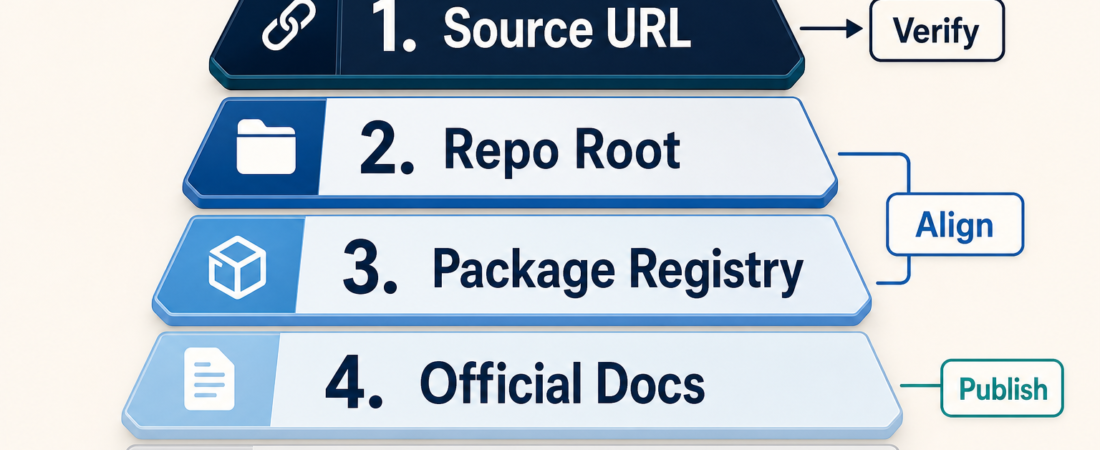
ASE leaves some metadata blank because an empty field is easier to explain than a confident field that points operators in the wrong direction. Agent skill pages are used to decide what to install, which workflow to route, and what risk boundary applies. If a source URL, repository root, package registry, or official documentation does not support a claim, ASE should not fill the gap with inference. Blank metadata is not a failure of polish. It is a signal that the catalog is waiting for evidence before publishing a stronger claim.
| Evidence level | What it can support | If it is missing |
|---|---|---|
| Source URL | The canonical project or skill origin | Do not invent provenance |
| Repo root | Stars, license, maintainers, install path | Avoid borrowing parent metrics blindly |
| Package registry | Install names, releases, distribution status | Keep setup notes cautious |
| Official docs | Supported workflows and configuration | Describe only observed behavior |
| Unknown | No reliable claim yet | Leave it blank |
Why Blank Fields Are Better Than Guesswork
A catalog for agent skills is not just a list of interesting tools. Operators use it to decide whether an agent should read production data, open a browser session, summarize a document archive, or prepare a deployment check. That makes metadata operational. A wrong source URL can send someone to the wrong maintainer. A copied star count can exaggerate adoption for a small subdirectory inside a large monorepo. A guessed package name can waste setup time or, worse, point to the wrong install target.
This is why ASE’s earlier blank-is-better-than-wrong metadata rule matters. The rule is simple: if the catalog cannot confirm a field from the source, the honest answer is blank. That is less tidy on the surface, but it preserves the reader’s ability to distinguish verified information from open questions.
Metadata Is Part Of The Safety Boundary
The risk is clearest when a skill touches live systems. A page for Wren Engine semantic data context should not imply unrestricted database access if the source supports governed semantic modeling. A page for MCP Toolbox approved database operations should preserve the distinction between approved tools and ad hoc SQL. Those differences are not copy details. They tell an operator where the agent may act and where a human review or admin-controlled boundary should remain.
The same applies outside data workflows. Playwright MCP browser automation belongs in a different trust frame than a documentation lookup skill. Browser automation can click, submit, and verify visible state. If the source evidence does not support claims about authentication handling, screenshots, storage state, or supported browsers, ASE should not fill those fields from assumptions. Operators need to know what the skill is prepared to do, not what a similar tool might do in another project.
Where Source-Backed Claims Come From
The strongest evidence usually starts with a canonical project page. GitHub’s repository documentation describes repositories as the home for project files, history, issues, and collaboration context, which makes the repository root a better source for maintainer and license signals than a third-party mention. Package registries such as the npm registry can confirm distribution names, versions, and install commands, but they do not automatically prove that a package maps cleanly to an ASE skill page. Official docs can explain intended setup and supported workflows, but docs can drift from the current release.
That is why ASE separates evidence types instead of blending them into a single confidence score. A repo can support source and license fields. A package registry can support installation fields. Official docs can support configuration and usage notes. A blog post, README comment, or social mention may be useful context, but it should not be treated as proof of maintainer identity, compatibility, or production readiness.
How This Helps Operators Choose Skills
Blank metadata gives operators a clearer decision path. If a field is filled, the reader can expect ASE to have evidence behind it. If a field is blank, the reader knows to inspect the source before depending on that attribute. That makes the catalog more useful for practical routing. Someone comparing Altimate Code for deterministic SQL and dbt analysis with Databasement database runbooks is not just comparing names. They are deciding whether the workflow is analysis, backup orchestration, recovery, or review. Metadata should sharpen that decision, not smooth over the difference.
The same standard supports discovery pages such as Browse Skills, star-sorted skill discovery, and Categories. Rankings and category pages are only as useful as the evidence behind each card. If ASE mixes verified and guessed metadata without showing the difference, the browsing experience becomes faster but less reliable. For agent workflows, that is the wrong tradeoff.
What ASE Should Leave Blank
There are a few fields where restraint matters most. Author and maintainer fields should stay blank when the source does not clearly identify a responsible project owner. Star counts should stay blank or source-qualified when a skill maps to a subdirectory, package, or integration inside a larger repository. Tool names should not be expanded from marketing copy unless the source exposes a concrete command, API, package, or server. Industry mappings should wait for domain workflow evidence, not just a word that happens to appear in the README.
This is especially important for regulated or high-impact workflows. If a skill can support healthcare documentation, legal document intake, finance operations, or customer support, ASE should describe the supported workflow and the boundary. It should not imply advice, autonomous approval, or compliance coverage that the source does not claim. A blank field is often the cleanest way to keep that boundary visible.
What To Watch
When reading an ASE skill page, treat missing metadata as a review prompt, not as a defect. Check whether the source URL points to the exact project, whether the install instructions match official distribution channels, and whether the category or industry placement reflects a real workflow. If a page links to a large parent repository, look for evidence that the specific skill, package, or subproject is the part being described. If that evidence is missing, use the skill cautiously and keep a human checkpoint before production use.
The broader trust model is explained in ASE’s post on Skill of the Day, Featured Skills, and Trust Signals. The short version is that catalog quality should come from traceable evidence, not from filling every card to look complete. A marketplace earns trust by being clear about what it knows, what it can verify, and what it has intentionally left unclaimed.
FAQ
Does blank metadata mean a skill is low quality?
No. It means ASE has not confirmed that specific field from a source strong enough to support it. The skill may still be useful, but that attribute needs review.
Why not infer missing fields from the repository name or README?
Inference is useful for research, but published metadata should be stricter. Repository names, README language, and project descriptions can be ambiguous, outdated, or broader than the actual skill workflow.
Can creators help fill blanks?
Yes. The best fix is source evidence: canonical URLs, install paths, official docs, package registry links, and clear boundaries around what the skill is meant to do.
What should operators do when key fields are blank?
Use the blank as a checklist item. Verify the source, confirm setup, and keep the workflow in review mode until the missing claim is backed by evidence.